
No Lunch and A Dinnertime Binge
You get home late, not feeling (or noticing) hungry all day. Now, all of a sudden, you feel ravenous and smash through dinner and more. This isn’t a willpower issue, for some (especially neurodivergent folk) it’s a misunderstanding of hunger cues resulting in skipped meals and not eating enough during the day.
For many neurodivergent adults, workdays are built in a way that makes eating easy to lose: back-to-back meetings, deep focus, noisy kitchens, and no natural cue to stop for lunch. A small grazing box left at the desk is something I felt very helpful when I was at my lowest capacity, especially after clinical placement.
This little “grazing box” is a simple way to keep nourished, especially when you’re experiencing difficulties remembering every meal: a divided box of shelf-stable snacks within arm's reach, so eating takes one small action instead of a chain of decisions (something I struggle with a lot!). No fridge, no prep, no queue for the microwave.
This post covers why meals get missed at work, how to fill a box with snacks that actually sustain you through the afternoon, and how to set it up in a shared workplace.
Why meals get missed at work
Missed meals at work isn’t about willpower. They tend to come from the way the day is structured and how your body signals need.
Meetings fill the gaps. Calendars with no break leave no natural window to eat.
Hyperfocus hides hunger. When you're absorbed, the signal can stay quiet until it arrives all at once.
Hunger cues can be unreliable. Differences in interoception can make hunger feel vague or like something else.
Shared kitchens can be hard. Noise, smells, queues and small talk make a lunch break costly, so it gets skipped.
Masking uses energy. After managing the day, deciding what to eat can feel like one decision too many.
Some medications (e.g. ADHD medications) dull appetite through the workday, pushing most eating into the evening.
A snack box doesn't remove any of this. It makes eating possible in the middle of it.
Build your work box
Choose snacks that sustain. Options with fibre, protein or healthy fats tend to keep energy steadier through an afternoon than snacks that are mostly refined carbohydrate, so aim for at least one sustaining food per compartment. Everything below is shelf stable and easy to eat at a desk.
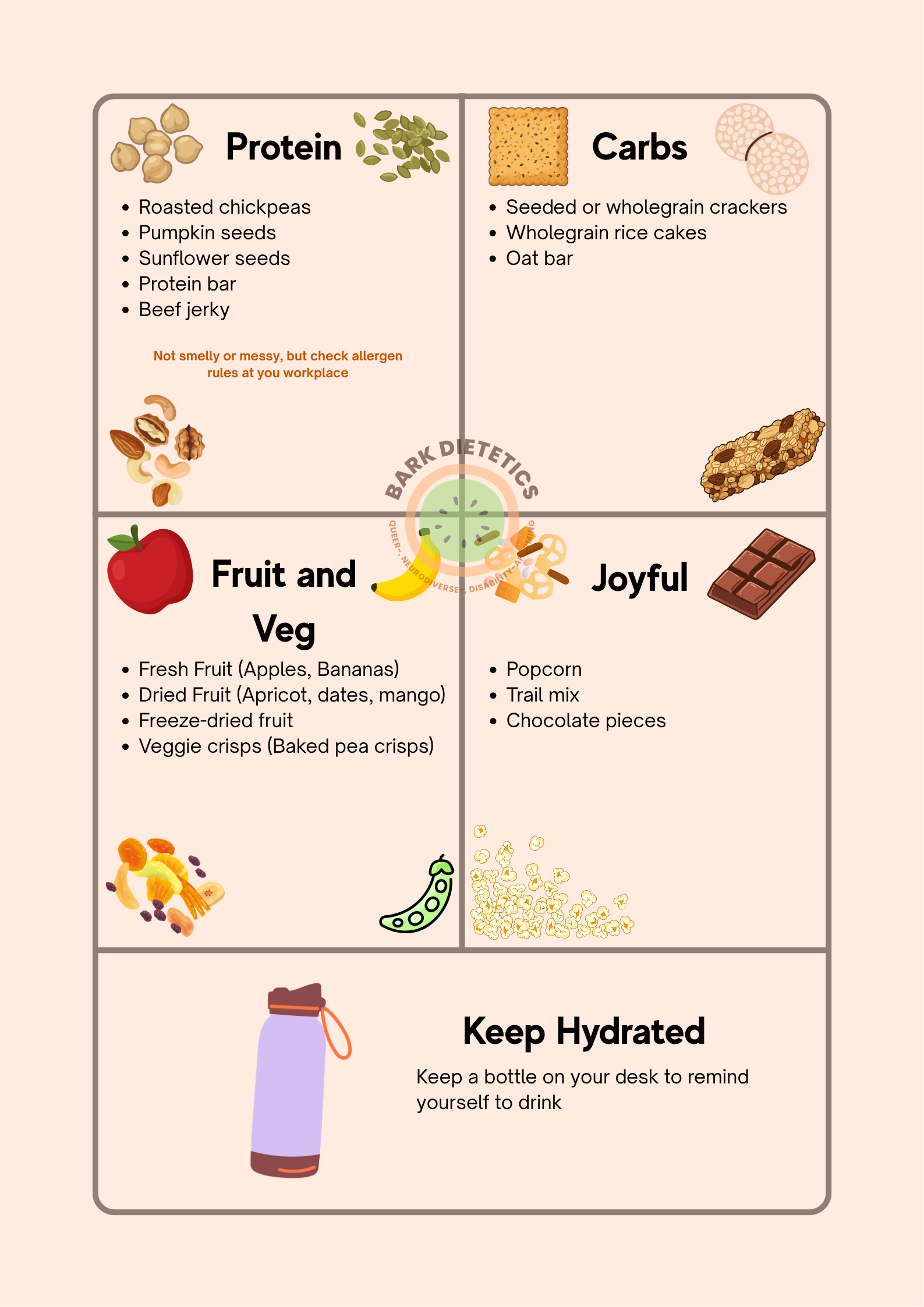
Pairing for staying power. Put a carb with a protein or fat: seeded crackers with a seed butter pot, an oat bar with dried apricots, or roasted chickpeas with rice cakes.
Keep safe foods in. If a food always feels okay, it earns a permanent spot. A try-it corner is optional and can sit untouched.
Setting it up at work
Keep it in sight. A desk drawer you open often works, but a box on the desk works better. Out of sight is easy to forget.
Put snacks in the calendar. Block a recurring 10-minute "snack" slot mid-morning and mid-afternoon, and treat it like any meeting.
Pair it with something you already do. Reach into the box when you open email, join a call with your camera off, or refill your water.
Use a prompt that fits you. A quiet phone alarm, a sticky note or a smartwatch nudge labelled "box" can break through hyperfocus.
Restock on a set day. Monday morning or Friday afternoon, with use-by dates checked, keeps the box from running empty.
Mind shared spaces. Check allergen rules, and choose low-smell, low-noise, low-mess foods if you share a desk area.
Ask about adjustments. If eating at your desk or taking short breaks helps, you can raise it as a workplace adjustment with your manager or HR.
This is general information, not personal advice. If eating regularly is hard, a dietitian can help you tailor a box to your needs.
A note from Jack
I'm Jack Bark, an Accredited Practising Dietitian at Bark Dietetics. I offer weight-inclusive, neurodiversity-affirming nutrition care in clinic in Kilsyth or via telehealth, with weekend and weekday telehealth times that suit work schedules. To talk about a box that fits your workday, email jack@barkdietetics.com.au or visit www.barkdietetics.com.au.